
Will Smith – Neo
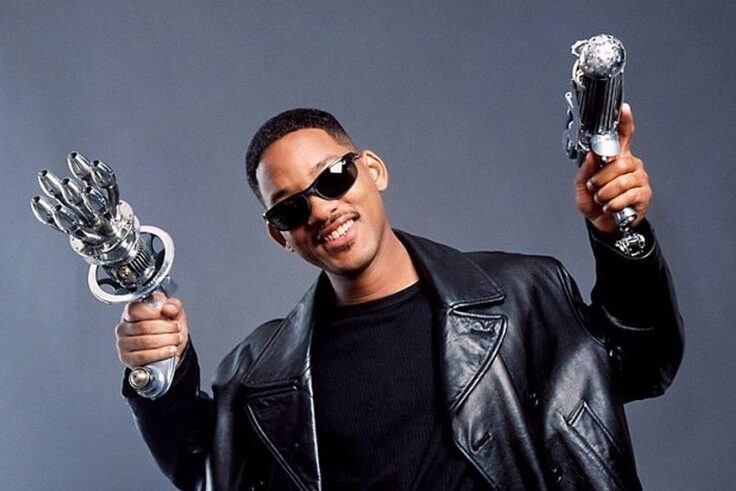
In the late 1990s, Will Smith was arguably the biggest movie star on the planet following the massive success of Independence Day in 1996 and Men in Black in 1997. When the Wachowskis approached him around 1997 to play Neo in The Matrix (1999), the concept felt a bit too experimental for him. The directors tried to explain their revolutionary “bullet time” visual effects, but Smith later confessed he didn’t quite grasp the vision. He ultimately turned down the role to star in the steampunk western Wild Wild West (1999), which was released on June 30 of that year but failed to live up to box office expectations.
The decision became a legendary “what if” in cinema history after The Matrix premiered on March 31, 1999, and completely redefined the sci-fi genre. Keanu Reeves took the role instead, delivering a performance that turned the film into a global phenomenon earning over $460 million. Smith has since handled the situation with a great sense of humor, noting that Reeves was actually the perfect fit for the character’s stoic nature. While Wild Wild West was a rare stumble for Smith at the time, his honesty about missing out on a cultural landmark remains a favorite piece of Hollywood trivia.
Matt Damon – Avatar

By the mid-2000s, Matt Damon was a household name thanks to the Bourne trilogy and his 1997 Oscar win for Good Will Hunting. During the development of Avatar (2009), legendary director James Cameron offered Damon the lead role of Jake Sully. Despite the prestige of working with the man who directed Titanic, Damon had to decline due to his existing filming commitments for The Bourne Ultimatum (2007) and Green Zone (2010). He didn’t want to abandon the crew of the Bourne franchise, a move that showed his loyalty even when a massive opportunity was knocking.
When Avatar hit theaters on December 18, 2009, it didn’t just succeed; it became the highest-grossing film of all time. Cameron had reportedly offered Damon 10% of the film’s profits to sweeten the deal, which would have resulted in a payday of roughly $250 million. Damon frequently jokes in interviews that he is the man who turned down the most money in the history of acting. While Sam Worthington eventually took the role and became a star, Damon’s career didn’t suffer, though he still playfully refers to the choice as his most expensive mistake.
John Travolta – Forrest Gump
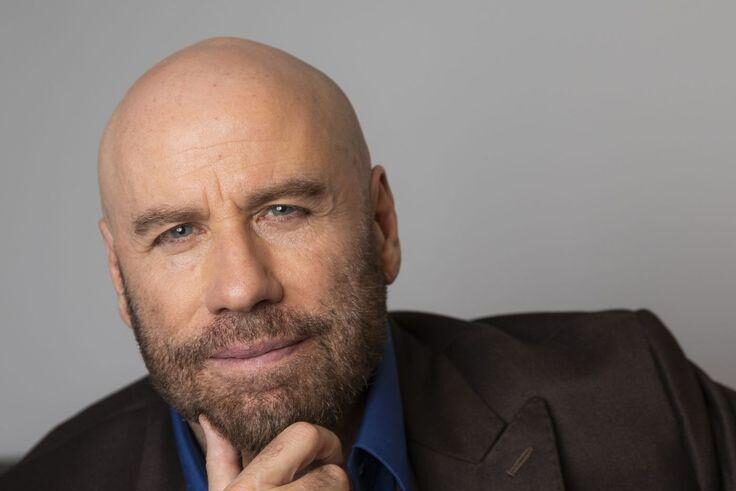
In the early 1990s, John Travolta was looking for a project to reignite his career after a period of professional cooling. He was offered the title role in Forrest Gump (1994), an emotional drama directed by Robert Zemeckis based on the 1986 novel. Travolta passed on the opportunity, choosing to focus on other scripts he felt were a better fit for his persona at the time. The role was eventually handed to Tom Hanks, who brought a specific kind of Midwestern charm and vulnerability to the character of the slow-witted but kind-hearted Alabamian.
Released on July 6, 1994, Forrest Gump became a massive critical and commercial juggernaut, winning six Academy Awards including Best Picture. Tom Hanks won his second consecutive Best Actor Oscar for the role, cementing his place in film history. While Travolta later admitted that declining the role was a significant oversight, 1994 turned out to be a great year for him regardless. He starred as Vincent Vega in Quentin Tarantino’s Pulp Fiction, which premiered in October 1994 and successfully resurrected his status as an A-list leading man in Hollywood.
Al Pacino – Han Solo
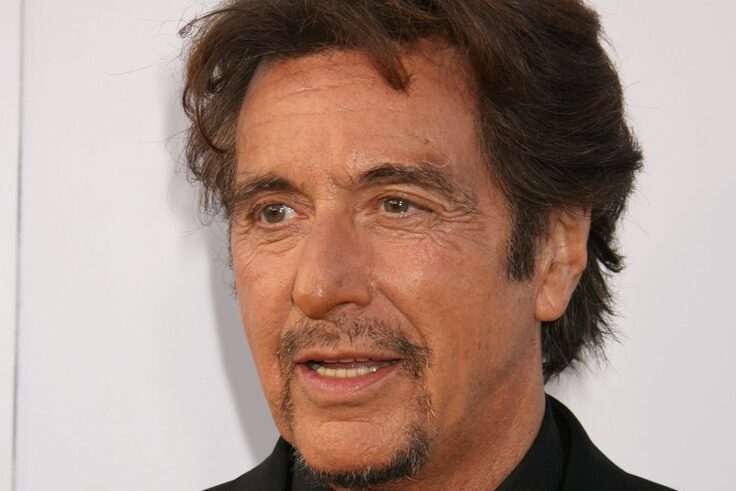
During the mid-1970s, Al Pacino was at the absolute peak of his powers following his legendary work in The Godfather (1972) and The Godfather Part II (1974). George Lucas, who was then a young director, offered Pacino the role of the cynical space pilot Han Solo for his upcoming project, Star Wars (1977). After reading the script, Pacino found the story confusing and couldn’t quite wrap his head around the complex world-building Lucas was attempting. He famously remarked that he didn’t understand the “dream-like” quality of the screenplay and decided to pass.
The role was eventually secured by Harrison Ford, who was working as a carpenter at the time and had a small role in Lucas’s American Graffiti. When Star Wars opened on May 25, 1977, it changed the entertainment industry forever and turned Ford into a global icon. Pacino has since laughed about the decision, jokingly saying that he “gave Harrison Ford a career.” While it’s hard to imagine anyone else in the Millennium Falcon, Pacino’s choice allowed him to continue focusing on gritty, grounded dramas that defined his legendary reputation throughout the late 70s and 80s.
Halle Berry – Speed

Before she became an Oscar winner, Halle Berry was a rapidly rising star with a notable performance in the 1992 hit Boomerang. In the early 90s, she was approached for the female lead in the high-octane thriller Speed (1994). At the time, the script about a bus that couldn’t slow down below 50 miles per hour seemed a bit far-fetched to many, and Berry ultimately decided not to take the part. The role of Annie Porter was then offered to Sandra Bullock, who was relatively unknown to mainstream audiences at that specific moment.
Speed was released on June 10, 1994, and it exceeded every expectation, earning over $350 million worldwide and becoming a defining action film of the decade. The chemistry between Bullock and Keanu Reeves was electric, and the film effectively launched Bullock into the Hollywood stratosphere. Berry has since commented that she didn’t see the potential in the script at the time, but she clearly didn’t miss a beat in the long run. She went on to achieve massive success in the X-Men franchise and made history with her 2002 Academy Award win for Monster’s Ball.
Gwyneth Paltrow – Titanic

In the mid-1990s, Gwyneth Paltrow was one of the most sought-after young actresses in the industry. As James Cameron began the long casting process for his epic romance Titanic (1997), Paltrow was high on the list to play Rose DeWitt Bukater. While she was definitely in the running, the role eventually went to Kate Winslet, who famously campaigned hard for the part. Paltrow has since reflected on the period with grace, noting that while she was close to the project, she chose to pursue other creative paths that felt more personal to her at the time.
Titanic set sail in theaters on December 19, 1997, and became a literal titan of the box office. It held the record for the highest-grossing film for twelve years and won a staggering 11 Academy Awards. Winslet’s performance made her a global superstar and a frequent awards contender. Fortunately for Paltrow, her career didn’t lose any momentum; she starred in Shakespeare in Love just a year later, which earned her the Academy Award for Best Actress in 1999. The situation remains a perfect example of how two different actresses can find massive success through very different projects in the same window.
Michelle Pfeiffer – Clarice Starling

By the dawn of the 1990s, Michelle Pfeiffer was widely considered one of the most talented and beautiful actresses in Hollywood. Director Jonathan Demme originally wanted her for the role of FBI trainee Clarice Starling in The Silence of the Lambs (1991). However, Pfeiffer was deeply unsettled by the intense darkness and violence found in the screenplay. She felt the story’s themes were too disturbing for her to inhabit comfortably at that time, and she ultimately turned the role down, opening the door for Jodie Foster to step into the iconic part.
The film was released on February 14, 1991, and became a rare horror-thriller to achieve universal acclaim. It swept the “Big Five” categories at the Academy Awards, including Best Picture and Best Actress for Foster. Pfeiffer later admitted that she regretted missing out on working with Demme again, but stood by her feelings regarding the heavy nature of the material. Her decision highlights a common reality for actors: sometimes a project’s quality is undeniable, but the emotional toll it requires is simply too high for a performer to take on at a particular moment in their life.
Christina Applegate – Elle Woods
Christina Applegate spent much of the 80s and 90s as a household name thanks to her role as Kelly Bundy on the hit sitcom Married… with Children. When the script for Legally Blonde (2001) came her way, she was hesitant. Having played a “blonde” character for over a decade on television, she was terrified of being typecast and wanted to prove her range in different types of roles. Consequently, she passed on the role of Elle Woods, which was then famously accepted by Reese Witherspoon, who was looking for a breakout comedic lead.
Legally Blonde premiered on July 13, 2001, and became an instant classic, grossing $141 million and spawning a massive franchise including sequels and a Broadway musical. Witherspoon’s portrayal of the pink-wearing Harvard Law student became a cultural touchstone and elevated her to the A-list. Applegate later spoke candidly about the decision, admitting that while she was afraid of repeating herself, Witherspoon did a much better job than she likely would have. It serves as a reminder that sometimes the fear of a stereotype can lead an actor to miss out on a role that actually subverts that very image.
Tom Selleck – Indiana Jones
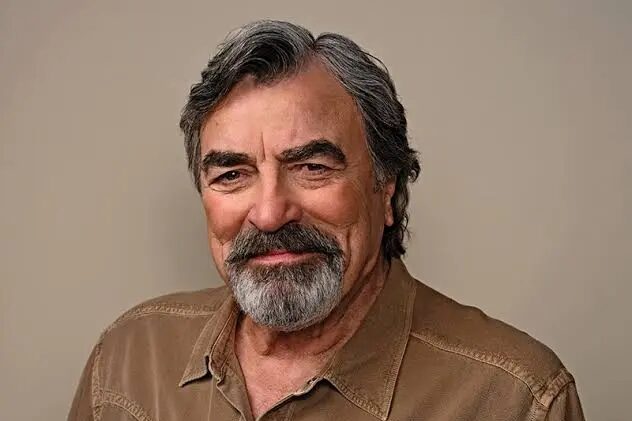
The story of Tom Selleck and Indiana Jones is one of the most famous “bad timing” tales in Hollywood. During the casting for Raiders of the Lost Ark (1981), Steven Spielberg and George Lucas were convinced that Selleck was the perfect man for the fedora. He even did a screen test that impressed the producers. However, Selleck had just filmed the pilot for a new TV show called Magnum, P.I. and was under contract. When the network refused to let him out of his commitment to film the movie, he was forced to drop out, leading the producers to hire Harrison Ford.
Raiders of the Lost Ark was released on June 12, 1981, and became a massive hit, launching one of the most durable franchises in history. Ironically, a writer’s strike delayed the filming of Magnum, P.I., meaning Selleck actually would have had time to film the movie after all. While Ford became the face of the legendary archaeologist, Selleck’s show became a massive hit in its own right, running for eight seasons and making him a television icon. Though he missed out on the big screen franchise, he remains a beloved figure from that golden era of 1980s entertainment.
Molly Ringwald – Pretty Woman
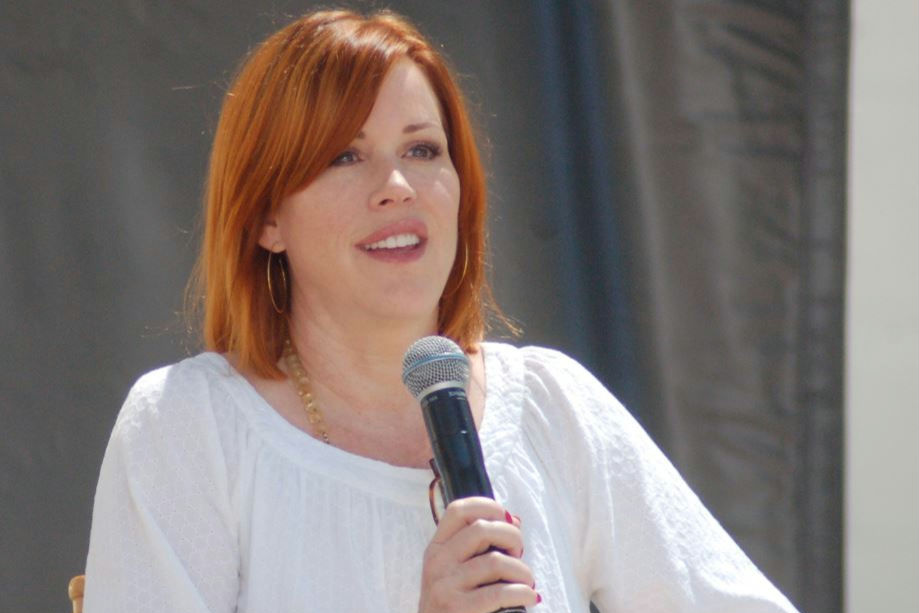
In the mid-1980s, Molly Ringwald was the undisputed queen of the “Brat Pack” and the face of teen cinema. As she moved into the 1990s, she was offered the lead role in a film titled 3,000, which was a much darker story about a woman working on the streets of Los Angeles. Ringwald wasn’t particularly fond of the script or the character at the time and decided to pass. The project was eventually rewritten into a more polished romantic comedy titled Pretty Woman (1990), and the lead role of Vivian Ward was given to a newcomer named Julia Roberts.
Released on March 23, 1990, Pretty Woman became a global phenomenon, earning over $463 million and making Julia Roberts the biggest female star in the world almost overnight. The film is still regarded as one of the best romantic comedies ever made. Ringwald later mentioned in interviews that while the movie was great, Roberts’ unique charm was what made it work, and she didn’t feel she could have brought that same energy to the part. It was a pivotal moment that marked the transition from the teen-focused 80s to a new era of Hollywood stardom in the 1990s.
Denzel Washington – Seven
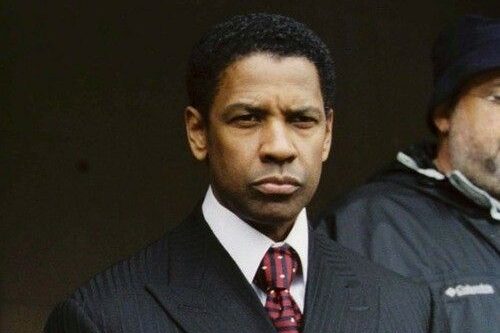
In the early 1990s, Denzel Washington was already a titan of the screen, having earned an Oscar for Glory (1989) and a nomination for Malcolm X (1992). When director David Fincher was putting together his gritty masterpiece Seven (1995), he reached out to Washington for the role of Detective David Mills. After reading the script, Washington was reportedly put off by the film’s oppressive darkness and its famously nihilistic ending. He felt the story was a bit too “demonic” and bleak for his tastes at the time, leading him to pass on the project entirely.
The role eventually went to Brad Pitt, and Seven was released on September 22, 1995, to massive critical acclaim and a global box office of over $327 million. The film is now considered one of the greatest psychological thrillers ever made, known for its atmospheric tension and shocking climax. Washington has since been very open about his regret, admitting in interviews that he made a mistake after seeing the finished product. He acknowledged that the film was a brilliant piece of art and that he simply didn’t see the vision on the page, though his career didn’t miss a beat as he continued to dominate Hollywood.
Leonardo DiCaprio – Boogie Nights
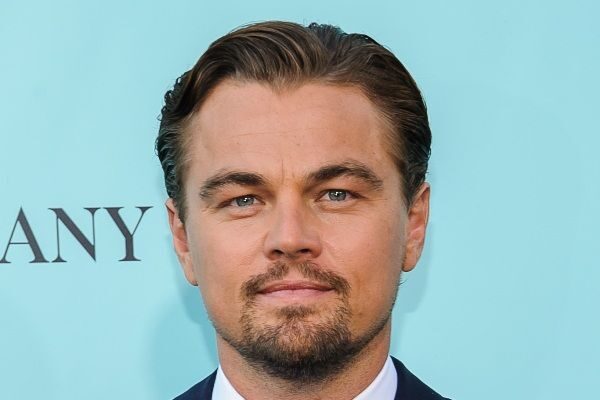
By 1996, Leonardo DiCaprio was the most sought-after young actor in the world. Paul Thomas Anderson, an emerging directorial talent, desperately wanted DiCaprio to star as Dirk Diggler in Boogie Nights (1997), a deep dive into the adult film industry of the 1970s. DiCaprio was actually a huge fan of Anderson’s work and spent a long time considering the role. However, he was faced with a massive scheduling conflict: he had already been offered the lead in a big-budget disaster romance titled Titanic (1997) directed by James Cameron, and he couldn’t do both.
DiCaprio chose the ship, and Titanic sailed into theaters on December 19, 1997, becoming a literal cultural revolution. It won 11 Academy Awards and turned DiCaprio into a global heartthrob on a level rarely seen in history. Meanwhile, Boogie Nights was released on October 10, 1997, and launched Mark Wahlberg’s career as a serious dramatic actor. While DiCaprio has expressed a bit of professional “FOMO” over missing out on working with Anderson, his choice to lead Titanic remains one of the smartest career moves in the history of show business, providing him the leverage to do whatever he wanted for the rest of his life.
Angela Bassett – Monster’s Ball

Angela Bassett is widely regarded as one of the most powerful performers of her generation, especially after her 1993 Oscar-nominated turn as Tina Turner. In the early 2000s, she was offered the role of Leticia Musgrove in the raw, low-budget drama Monster’s Ball (2001). Bassett took a look at the script but was uncomfortable with the graphic nature of the intimate scenes and the way the character was written. She felt the role didn’t align with the image she wanted to project as a Black woman in Hollywood and chose to turn it down based on her personal principles.
The role was then accepted by Halle Berry, and the film premiered on November 11, 2001. Berry’s performance was hailed as a career-best, and on March 24, 2002, she made history by becoming the first African American woman to win the Academy Award for Best Actress. The film became a major talking point in the industry for years. Bassett has remained steadfast in her decision, explaining that while the Oscar was a historic moment, she had to stay true to her own boundaries. This story is often cited as a prime example of how different actors weigh the balance between career prestige and personal integrity.
Jack Nicholson – Michael Corleone
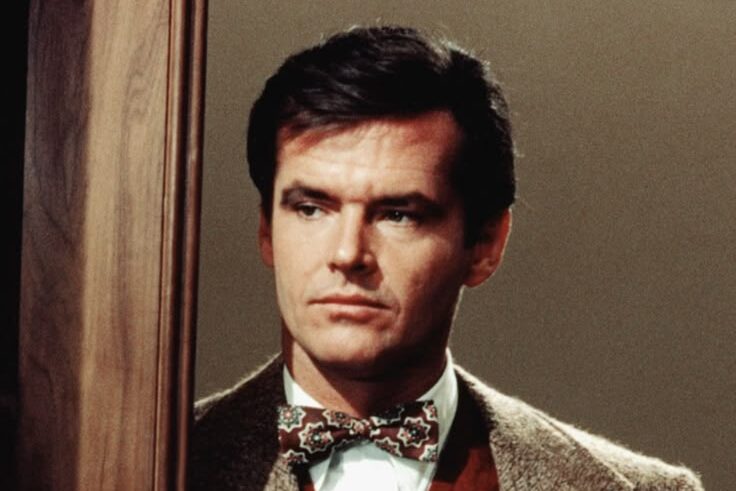
When Francis Ford Coppola was casting The Godfather (1972), the studio was pushing for a big name to play Michael Corleone. Jack Nicholson was already a major star thanks to Easy Rider (1969), and he was one of the top choices for the role. Surprisingly, Nicholson turned it down, but not because he didn’t like the script. He famously stated that he believed “Indians should play Indians and Italians should play Italians.” He felt that an actor with Italian heritage would bring an authenticity to the Corleone family that he simply couldn’t provide, showing a level of creative respect for the source material.
The role went to a then-unknown Al Pacino, and The Godfather was released on March 24, 1972. It went on to become what many consider the greatest film ever made, winning three Academy Awards including Best Picture. Pacino’s performance is still studied by acting students today as a masterclass in character transformation. Nicholson’s “miss” didn’t hurt him one bit; he went on to win three Oscars of his own and remained a king of Hollywood for decades. It’s a rare case where an actor’s exit from a project was motivated by a selfless desire to see the movie be as authentic as possible.
Josh Hartnett – Batman

In the early 2000s, Josh Hartnett was the “it” guy of Hollywood, starring in blockbusters like Pearl Harbor (2001) and Black Hawk Down (2001). When Christopher Nolan was looking to reboot the Caped Crusader with Batman Begins (2005), Hartnett was one of the very first actors he approached. However, Hartnett was feeling overwhelmed by the massive scale of fame he had already achieved. He was worried that signing a multi-film deal for a superhero franchise would swallow his identity and prevent him from taking smaller, more artistic roles. He ultimately decided to say no to the Batsuit.
The role was eventually taken by Christian Bale, and Batman Begins was released on June 15, 2005. The film was a massive hit and birthed The Dark Knight trilogy, which changed the way the world viewed superhero movies. Hartnett has since reflected on this period as a time when he needed to step back for his own mental health, though he did admit it was a bit painful to see how great Nolan’s films turned out. While he missed out on being one of the world’s biggest stars, he found a more peaceful path, later earning critical praise for his work in Penny Dreadful and Oppenheimer.
Henry Winkler – Danny Zuko
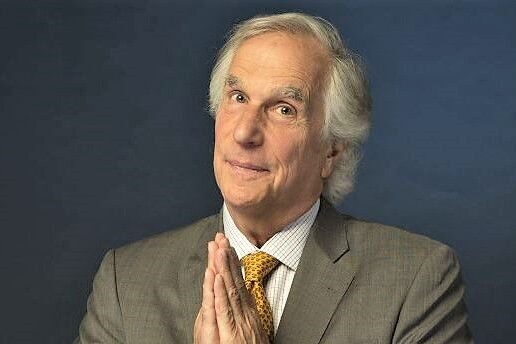
By the mid-1970s, Henry Winkler was a cultural phenomenon as “The Fonz” on the hit sitcom Happy Days. His leather-clad, cool-guy persona was so popular that he was the natural choice to play Danny Zuko in the 1978 film adaptation of Grease. Winkler looked at the role and realized it was almost identical to the character he was playing every week on television. Fearing that he would be stuck playing “the greaser” for the rest of his natural life, he turned down the part to seek out different kinds of work.
John Travolta, who was already a rising star from Saturday Night Fever, took the role instead. Grease was released on June 16, 1978, and became a global sensation, grossing nearly $400 million and becoming a staple of pop culture. Winkler later joked that he might have been a bit too hasty, noting that Travolta became incredibly wealthy from the film while he just kept working on his sitcom. However, Winkler’s career stood the test of time; he eventually won an Emmy for his role in Barry decades later, proving that while he missed the “Summer Nights,” he certainly didn’t lose his talent.


