
1. Golden Retriever
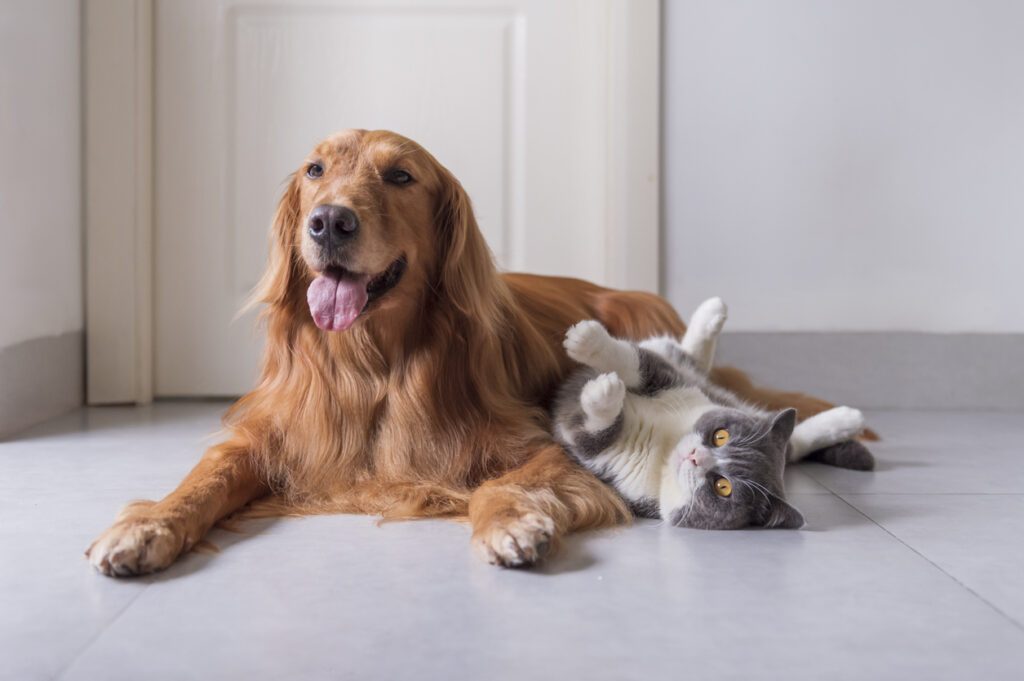
Golden Retrievers have long been celebrated for their gentle, patient personalities, making them ideal companions for households with multiple pets. Originally bred as hunting retrievers, their ability to work alongside other dogs and remain calm under pressure has translated into a sweet, tolerant demeanor at home. Whether it’s a cat lounging nearby, a rabbit hopping across the room, or another dog sharing their space, Goldens tend to respond with tail wags and curiosity rather than stress or dominance.
Their eagerness to please means they’re quick to learn household rules, including boundaries with smaller animals. Golden Retrievers thrive in homes where social interaction is plentiful, and that includes interaction with other species. As long as introductions are handled thoughtfully and early, a Golden is likely to embrace furry or feathered siblings as part of the family. Their trustworthy nature is why they’re frequently chosen as therapy and assistance dogs, and that same empathy extends naturally to other pets.
2. Labrador Retriever
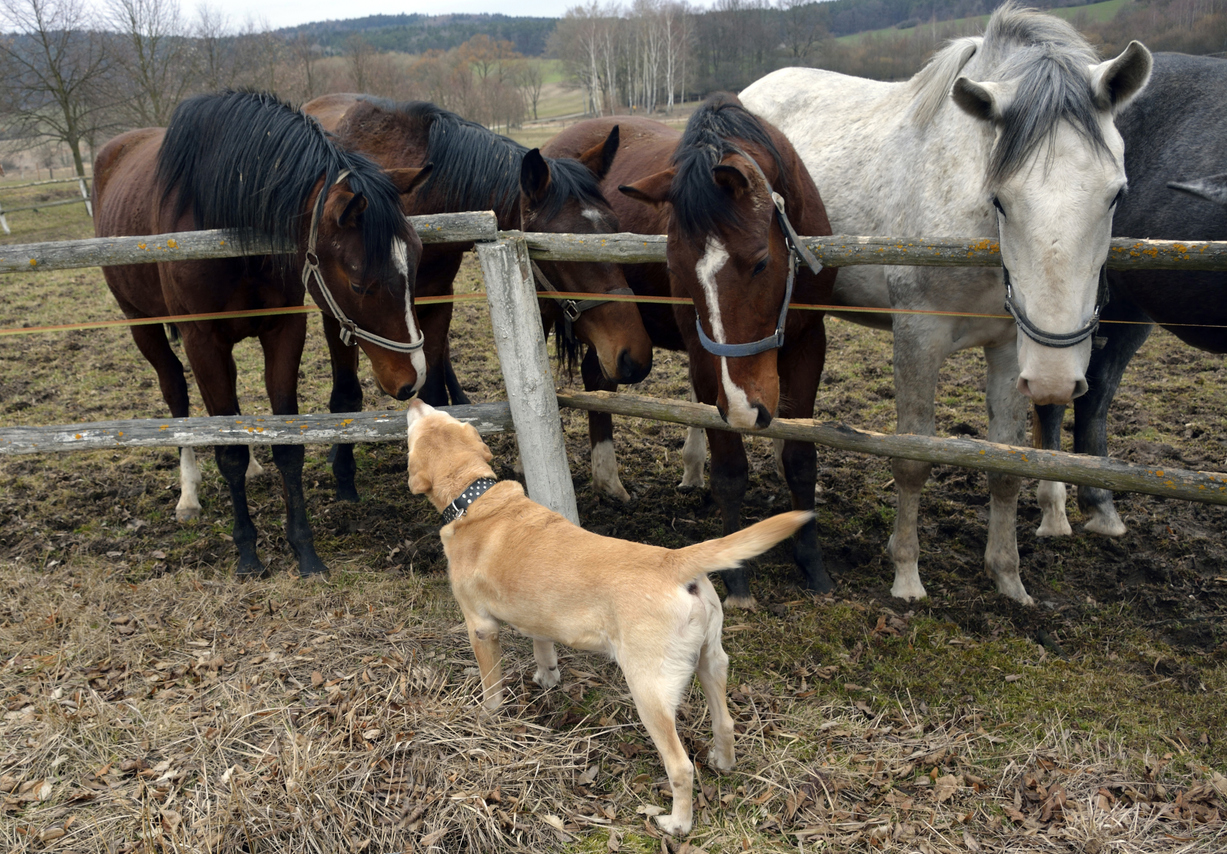
Labrador Retrievers are consistently ranked among the most popular dog breeds in the United States, and one reason is their easygoing, affectionate temperament. Labs are known for being incredibly people-oriented, but they also extend their friendliness to other animals. Whether it’s another dog, a curious kitten, or even a backyard chicken, Labs tend to approach with a wagging tail and a non-threatening attitude. Their sociability and lack of aggression make them an ideal choice for homes with existing pets.
Another bonus is their adaptability. Labs are quick learners and respond well to training, which helps establish respectful behavior with more delicate or territorial animals. While they may show curiosity and excitement, they’re not known to be aggressive or territorial. Early socialization helps reinforce these positive traits, ensuring they remain welcoming and calm around a variety of animals throughout their lives. With the right environment, a Labrador will treat your other pets like members of their extended pack.
3. Cavalier King Charles Spaniel

The Cavalier King Charles Spaniel may be small in stature, but they are big on affection and charm. These dainty dogs were bred to be companions to royalty, and their gentle, loving nature remains their hallmark trait. Unlike some toy breeds that can be possessive or anxious around other animals, Cavaliers tend to be open-hearted and easygoing. They’re particularly low on prey drive, which means they’re less likely to chase or intimidate smaller pets like cats, rabbits, or birds.
Because they crave companionship, Cavaliers are often happiest in homes with other animals they can bond with. Whether it’s curling up next to a cat on the couch or sharing playtime with another dog, they enjoy the company and rarely display dominance or jealousy. Their size also works in their favor, making them less intimidating to smaller animals. As long as interactions are supervised at the start, a Cavalier King Charles Spaniel is likely to make fast friends with just about any creature you already have at home.
4. Collie
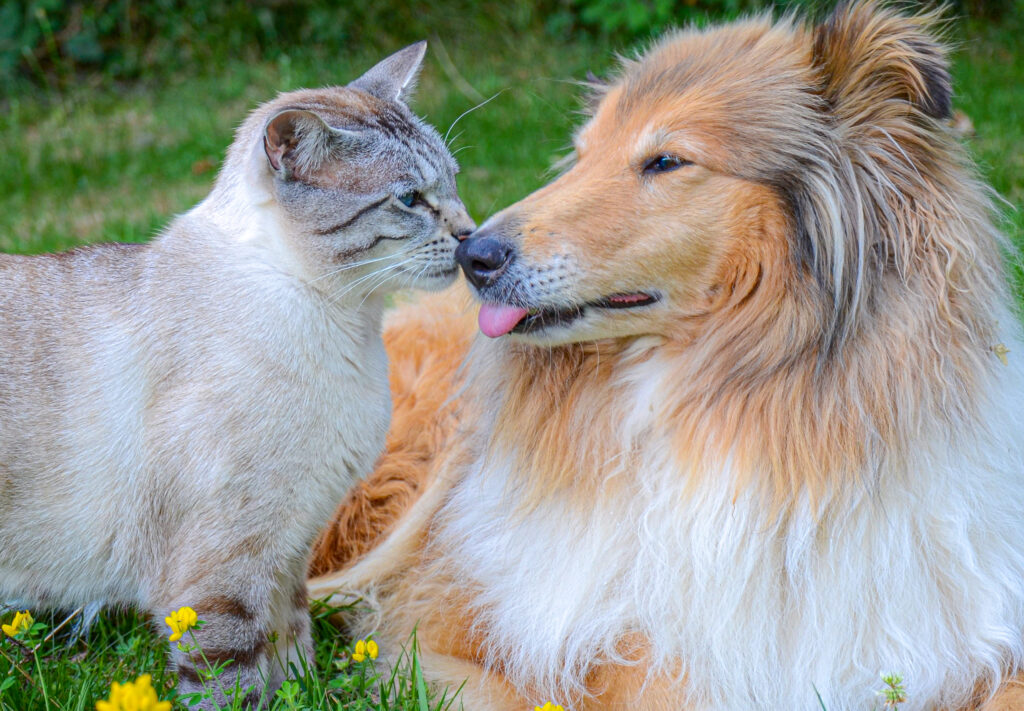
Collies are known for their intelligence, loyalty, and striking good looks, but they’re also one of the most animal-friendly breeds you can find. Made famous by the classic TV dog Lassie, the Collie was initially bred to herd sheep and protect livestock, which means they have an instinct for caretaking. This nurturing tendency extends to other animals in the household. They’re not just tolerant of different pets; they often try to protect them, too.
Collies are incredibly attuned to their environment and tend to be gentle with smaller or more fragile creatures. Their herding background gives them a strong sense of order and cooperation, so they do well in structured homes where other pets are part of the daily routine. With consistent training and early exposure to different animals, Collies quickly learn how to interact with kindness and restraint. Their lack of aggression and high emotional intelligence make them excellent companions in multi-pet homes.
5. Beagle
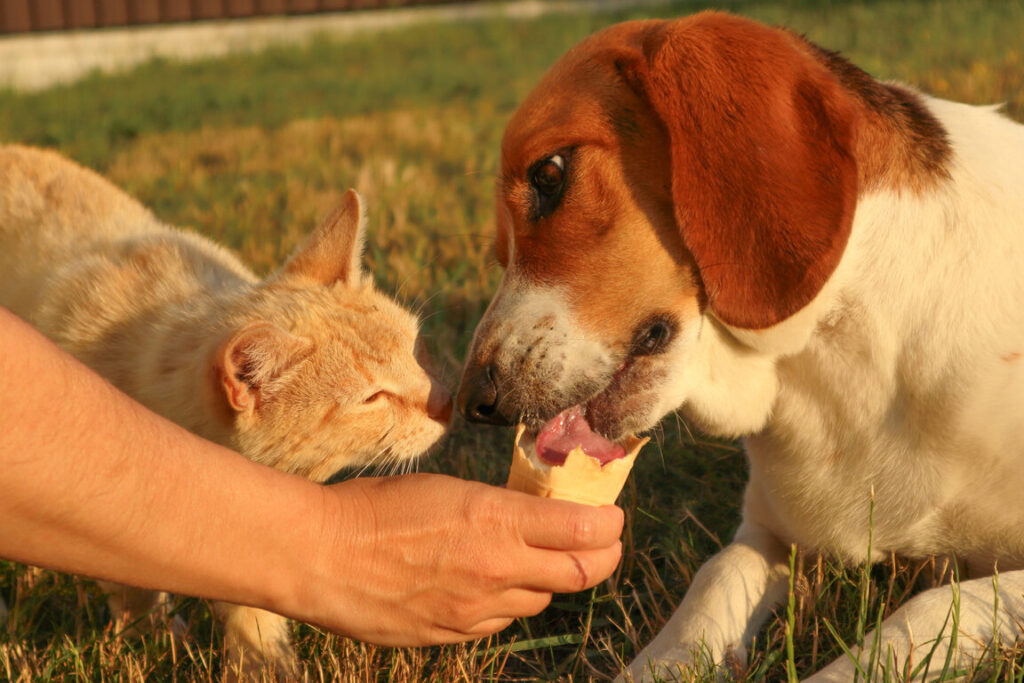
Beagles are small hounds with big personalities and an even bigger love for socializing. Originally bred to hunt in packs, Beagles are used to working alongside other dogs and animals, which makes them naturally comfortable in multi-pet settings. Their compact size and happy-go-lucky temperament allow them to coexist with everything from cats to ferrets, though their strong scent-tracking instincts may cause them to investigate new pets a little too enthusiastically at first.
While Beagles are friendly, they can be stubborn, so early training is key to establishing peaceful relationships with smaller or more sensitive animals. Their curious nature sometimes leads them to chase or bark at unfamiliar pets, but with proper introductions and boundaries, they quickly adjust. Their desire for companionship means they usually don’t like being alone, so having another animal in the house can actually ease their anxiety. With patience and guidance, a Beagle can be a loyal friend to every member of your furry family.
6. Poodle (Standard and Miniature)
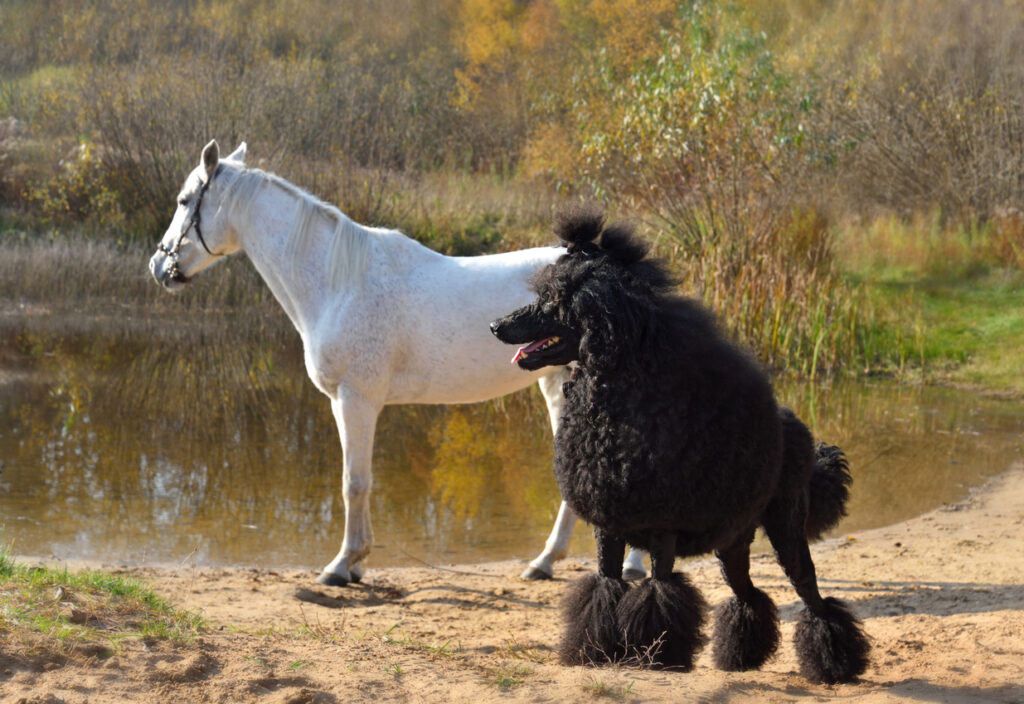
Poodles are often praised for their intelligence and elegance, but they’re also incredibly adaptable and friendly toward other animals. Available in three sizes—standard, miniature, and toy—Poodles can match the energy level and size needs of nearly any household. Their high intelligence makes them quick learners, so they’re easy to train to respect boundaries with other pets, whether those include a territorial cat or a shy rabbit.
Unlike some breeds that are prone to jealousy or dominance, Poodles tend to take a more observant and cooperative approach. They enjoy social interaction and thrive in environments where they can share their space and attention. Their calm demeanor and emotional sensitivity help them adapt well to multi-pet dynamics, and they’re unlikely to show aggression without provocation. With proper socialization and training, Poodles become confident yet gentle members of a diverse animal household.
7. Boxer

Boxers are playful, spirited, and full of energy, but they’re also fiercely loyal and emotionally sensitive. While their boisterous personality can be overwhelming for timid animals at first, Boxers tend to form strong bonds with other pets when introduced at a young age. Their natural curiosity and desire to play often lead them to engage rather than dominate, making them surprising allies to cats and small dogs once they’ve adjusted to each other.
Because of their size and energy level, Boxers do best in homes where their socialization is managed carefully, especially with more delicate animals. Early training helps channel their enthusiasm in positive directions and teaches them how to interact gently. Their clownish nature and deep loyalty often make them protective of their animal siblings. When raised in a household with other pets, a Boxer is more likely to see them as part of their pack rather than competition.
8. Basset Hound
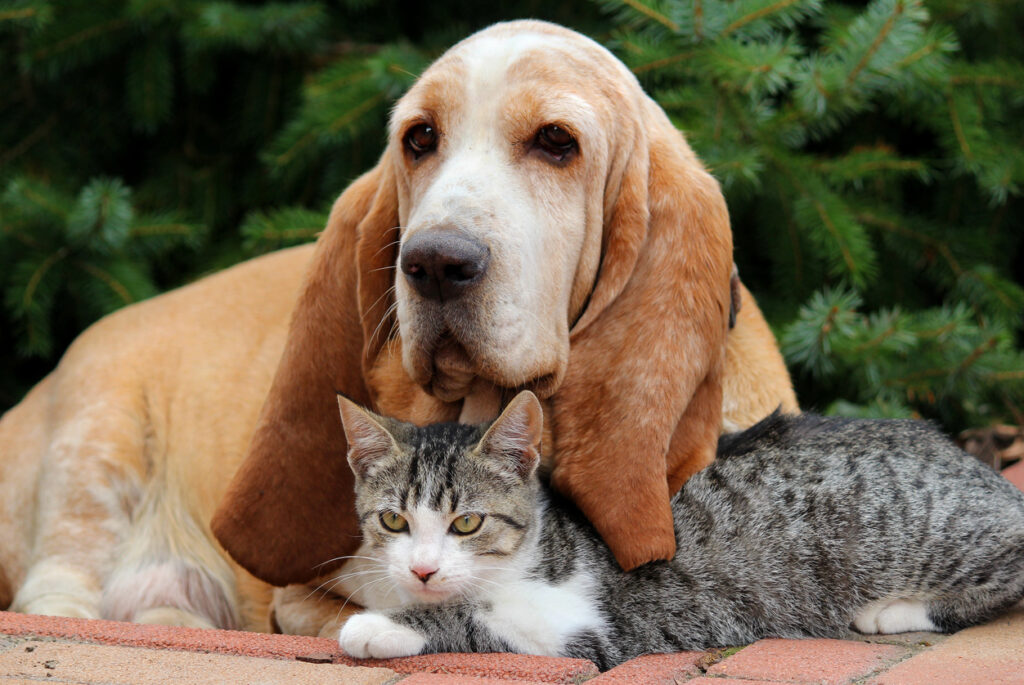
With their droopy ears, soulful eyes, and unhurried pace, Basset Hounds are among the most laid-back dog breeds around. Their calm demeanor and low energy levels make them a good match for households with smaller or older pets who prefer peace over chaos. Basset Hounds are more interested in lounging on the couch or sniffing around the yard than engaging in dominance games or chasing other animals.
Although they were originally bred for hunting, their mellow nature often overrides any instinct to pursue. They’re patient and generally unfazed by the presence of other animals, including cats, rabbits, and even birds. Their sociable nature also means they enjoy companionship, and having other animals around can be comforting to them. As long as new introductions are made with care, Basset Hounds tend to be tolerant, quiet cohabitants who mind their own business.
9. Bernese Mountain Dog
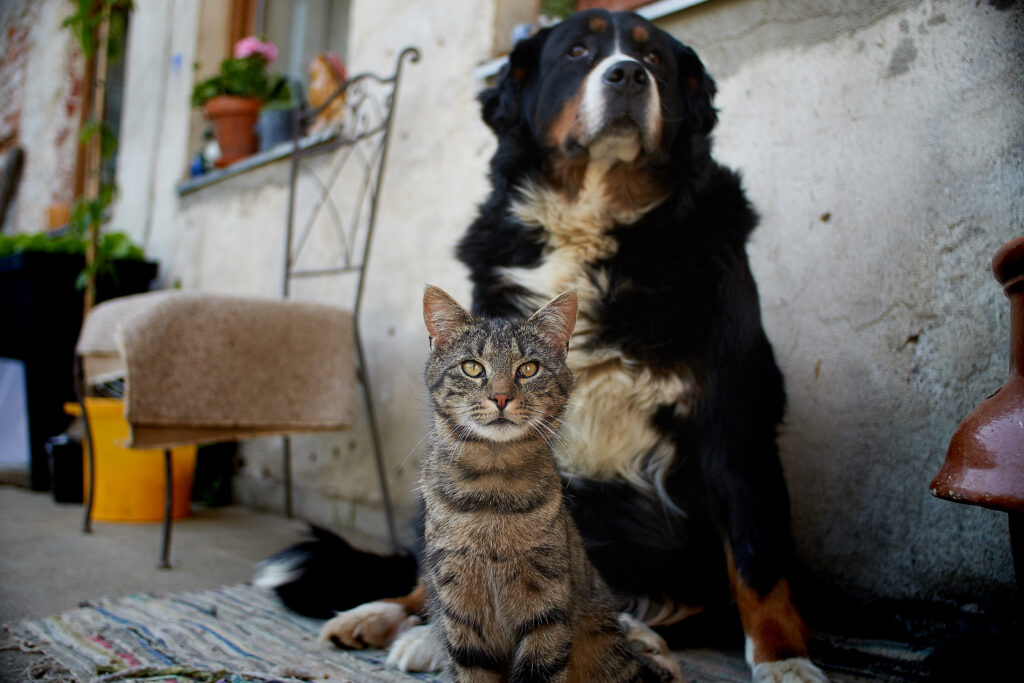
Bernese Mountain Dogs are known as gentle giants, and that nickname fits perfectly when it comes to their behavior around other animals. Despite their impressive size, these dogs are remarkably calm, affectionate, and easygoing. They were originally bred as working dogs on Swiss farms, where they had to coexist peacefully with livestock, cats, and other dogs. That heritage shines through in their composed and tolerant nature.
Berners are rarely aggressive and usually react to other animals with curiosity rather than confrontation. Their affectionate disposition allows them to form bonds with both humans and pets, and they tend to be protective without being possessive. While they do require space and proper training due to their size, they are among the most peaceful large breeds you can bring into a multi-pet home. A Bernese Mountain Dog is as likely to share a nap with your cat as they are to sit beside you on the porch.
10. Papillon
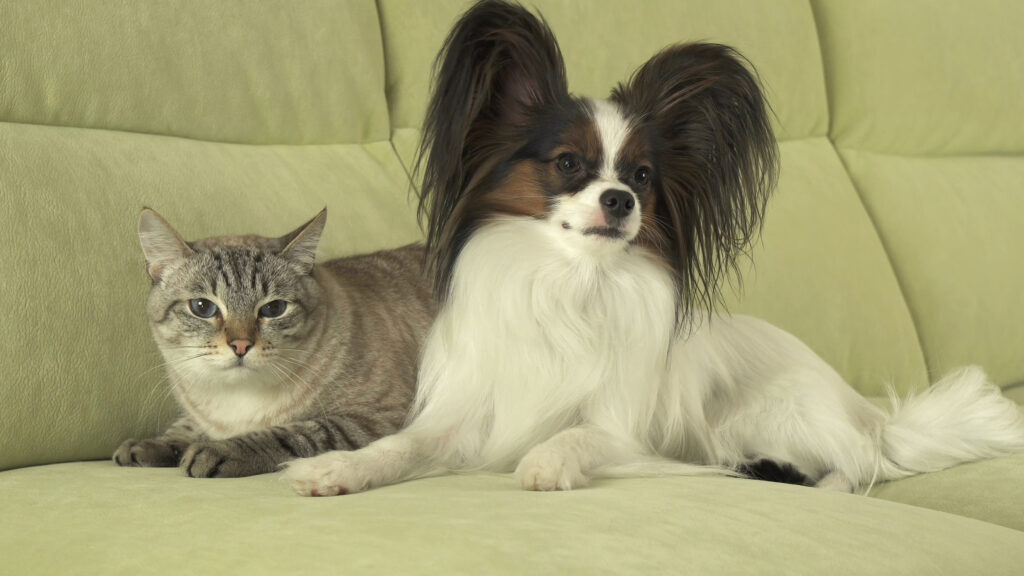
Despite being one of the smallest dog breeds, Papillons are surprisingly outgoing and well-adjusted in homes with multiple pets. Their name, which means “butterfly” in French, refers to their wing-shaped ears, but it could also apply to their light, sociable spirit. Unlike many toy breeds that can be territorial or anxious, Papillons tend to be curious and confident. They are often fearless around other animals, including much larger dogs or inquisitive cats.
Because of their intelligence and alert nature, Papillons are quick to adapt to new environments and companions. They enjoy companionship and stimulation, which other animals can provide. Their small size and friendly demeanor make them less threatening to skittish pets, and they usually don’t try to assert dominance. Early introductions and gentle supervision help smooth the way, but once familiar, Papillons thrive in the mix and may even take on a leadership role among their furry housemates.
11. Boston Terrier
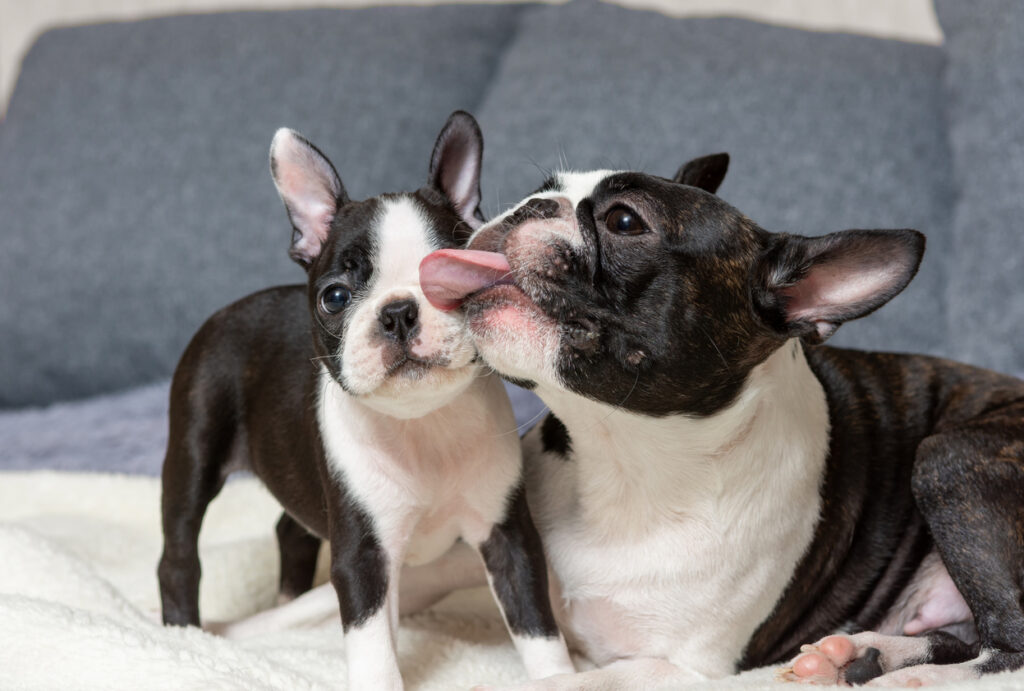
Boston Terriers are cheerful little charmers who thrive on companionship and are known for getting along with nearly everyone they meet, humans and animals alike. Sometimes called the “American Gentleman” because of their tuxedo-like coat and polite demeanor, Boston Terriers bring an enthusiastic but non-aggressive energy to the home. They’re social by nature and tend to approach new situations and pets with interest rather than intimidation.
Their manageable size and moderate energy level make them especially adaptable to small homes with a variety of animals. While they may occasionally try to initiate play with a chase, they’re not overly persistent or rough, and they usually respond well to boundaries. Boston Terriers do best when socialized young and when given regular attention and stimulation. Their strong people skills tend to carry over to other pets, making them an easy fit in homes with cats, rabbits, or other dogs.
12. Cocker Spaniel
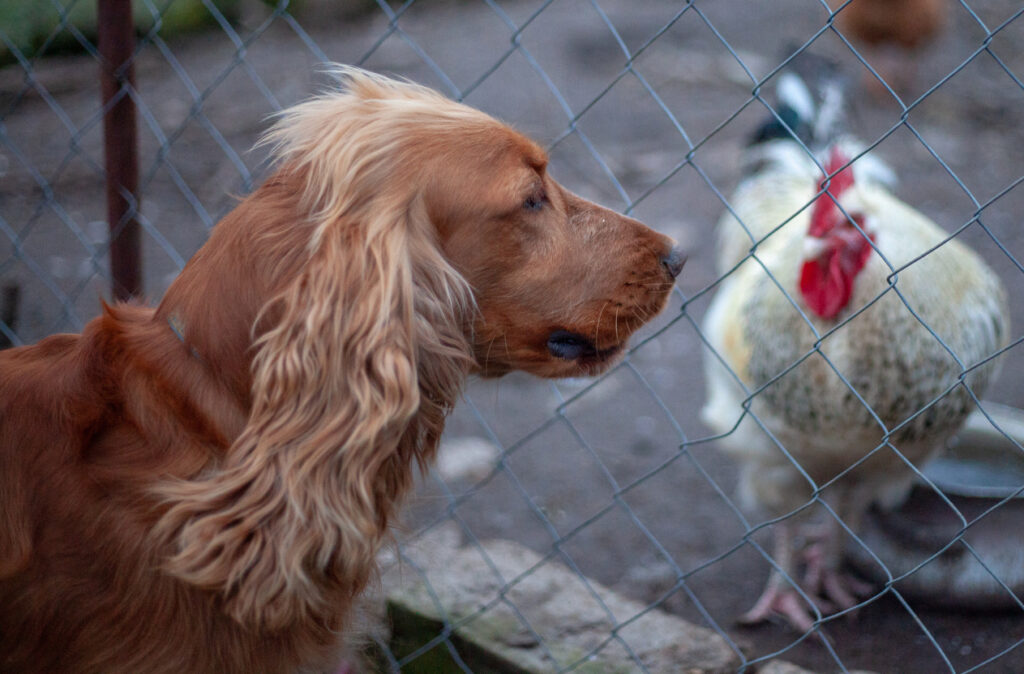
Cocker Spaniels are known for their soulful eyes, feathered coats, and affectionate nature, and those same traits make them excellent companions for homes with multiple pets. They’re social dogs who enjoy being part of a pack, whether that includes people, other dogs, or even cats. With their gentle disposition and low prey drive, Cockers are less likely to chase smaller animals and more likely to try to snuggle up next to them.
What also sets the Cocker Spaniel apart is its adaptability. These dogs are sensitive to the moods of those around them and often adjust their behavior accordingly. They’re naturally gentle, rarely aggressive, and eager to get along. While grooming needs can be high, their emotional needs are simple: they want companionship and harmony. With the right socialization and a calm introduction to other animals, the Cocker Spaniel will not just coexist but thrive in a busy, furry household.
13. Sheltie (Shetland Sheepdog)
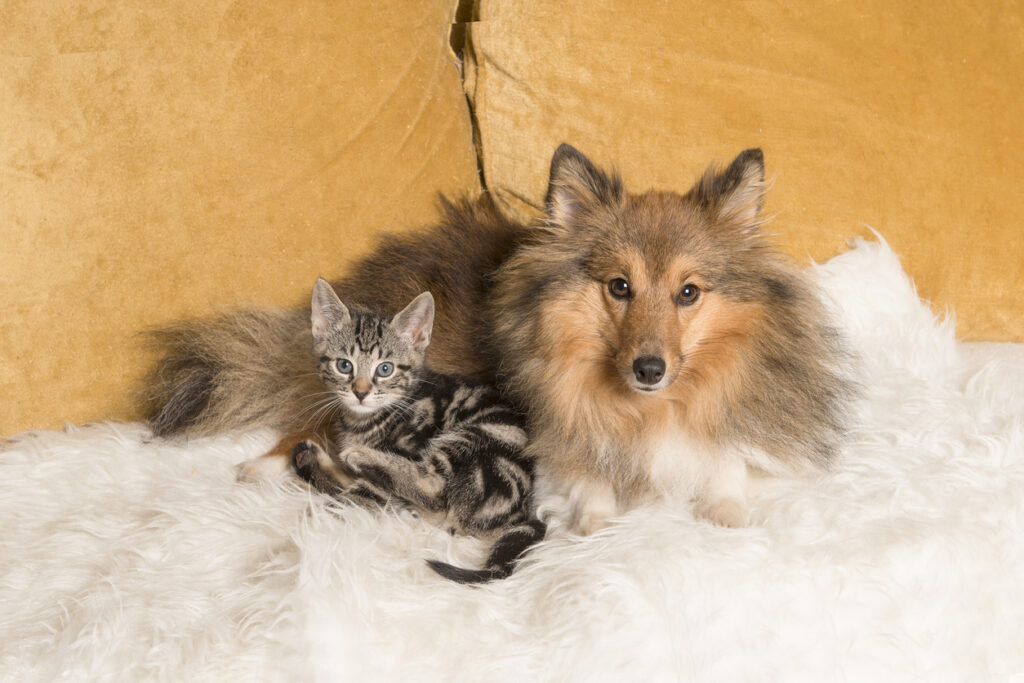
Shelties, or Shetland Sheepdogs, are small herding dogs with high intelligence and a strong desire to please. Their instinct to care for and protect often translates into gentle and respectful interactions with other animals. Though sometimes wary of strangers, Shelties are highly loyal to those within their inner circle—including fellow pets. They’re generally not aggressive and tend to steer clear of conflict, preferring to alert you to anything unusual rather than deal with it themselves.
Because they’re sensitive and quick learners, Shelties benefit from early exposure to other animals. Their herding background may lead them to gently corral or follow smaller pets around the house, but this is usually playful rather than domineering. With proper training, they learn boundaries quickly and often become nurturing companions to cats, rabbits, and even birds. Shelties do best in homes where routines are respected and their energy is constructively channeled through mental stimulation and light play.
14. Great Dane
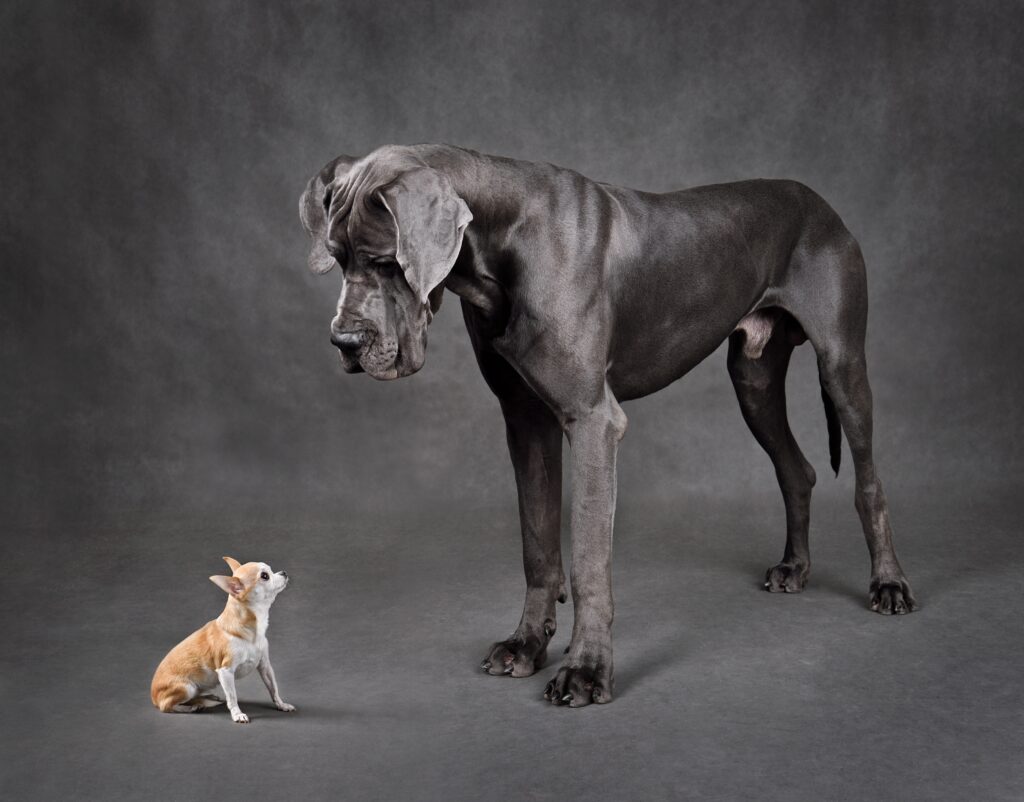
Great Danes might look like they’d tower over and intimidate any smaller animal, but in reality, they’re some of the kindest, most gentle dogs you’ll meet. Often called “gentle giants,” these massive dogs have a patient and affectionate temperament. Their size can be daunting at first for other pets, but Great Danes are rarely confrontational and typically approach new situations with calm curiosity. Many form strong bonds with cats and smaller dogs once they’ve adjusted.
Because of their laid-back nature, Great Danes often coexist peacefully in homes where other animals are already established. They don’t tend to have a high prey drive, and with proper introductions, they can be trusted not to chase or harass smaller companions. However, their sheer size means early training and supervision are essential to avoid unintentional injury during play. With good manners and a gentle heart, a Great Dane can be the surprisingly loving center of a diverse and happy animal household.
The More, the Furrier
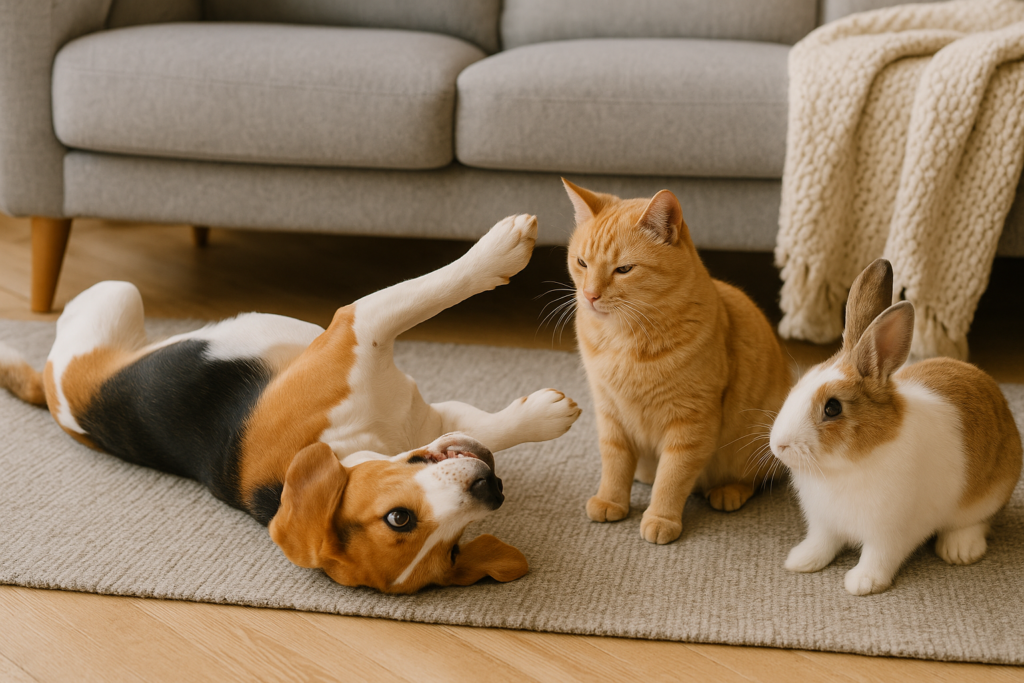
Bringing a new dog into a home with existing pets can feel like a gamble, but choosing the right breed makes all the difference. These 14 dogs have proven time and again that they can share space, toys, and even the spotlight with everything from cats and bunnies to birds and fellow pups. With early socialization, proper introductions, and a little patience, these breeds tend to lean toward friendship instead of rivalry.
Of course, every dog is an individual, and temperament can vary. But if you’re dreaming of a peaceful, multi-pet household, these gentle, adaptable companions give you a head start. Whether you’re pairing a Beagle with your tabby or introducing a Cavalier King Charles Spaniel to your parakeet, there’s a good chance you’ll end up with more harmony than havoc. Because in the right home, love really does multiply.
This story, 14 Dog Breeds That Get Along Best With Other Animals was first published on dailyfetch.net.


