
The Vanishing Union Leader
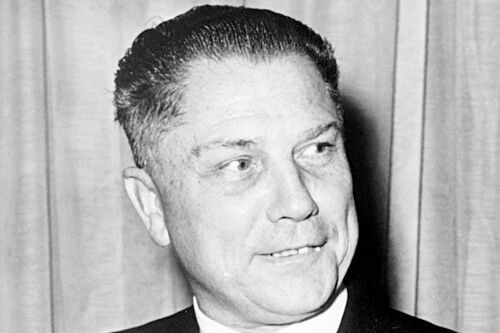
The mysterious case of Jimmy Hoffa remains one of the biggest “what-if” stories in American history. On July 30, 1975, the powerful boss of the Teamsters union headed to a meeting at the Machus Red Fox restaurant in suburban Detroit. He was there to meet with two mob figures to smooth over some professional friction, but he was never seen again. Hoffa had spent years building the union into a powerhouse, but his reported ties to organized crime eventually created a dangerous web of influence that many believe led to his sudden and quiet exit from the world.
What makes this story so legendary is the endless cycle of tips and dead ends that followed. Over the decades, the FBI has followed leads ranging from concrete floors in New Jersey to rural farms in Michigan, yet no physical evidence has ever been found. Because a body was never recovered, the case was officially closed in terms of a search, but the public’s curiosity hasn’t aged a bit. It’s a story defined by strong suspicions and zero closure, leaving a massive gap in the history of the American labor movement.
Lost In The Sky

Amelia Earhart was a global superstar and a pioneer for women in aviation long before she disappeared on July 2, 1937. While attempting to become the first woman to fly around the globe, she and her navigator, Fred Noonan, vanished somewhere over the vast Pacific Ocean. They were headed for a tiny speck of land called Howland Island, but they never made it. The news of her disappearance shocked the world and triggered the most expensive air and sea search in U.S. history at the time.
Most experts believe their Lockheed Electra simply ran out of fuel and crashed into the deep ocean. However, because no confirmed wreckage was ever found, wilder theories have filled the void for nearly a century. Some people wonder if they landed on a remote atoll, while others have explored even more dramatic ideas about wartime capture. Despite modern underwater sonar and deep-sea expeditions, the ocean refuses to give up its secrets. Her legacy as a hero is totally secure, but her final chapter remains a haunting mystery that continues to fascinate researchers today.
The Hijacker Who Escaped
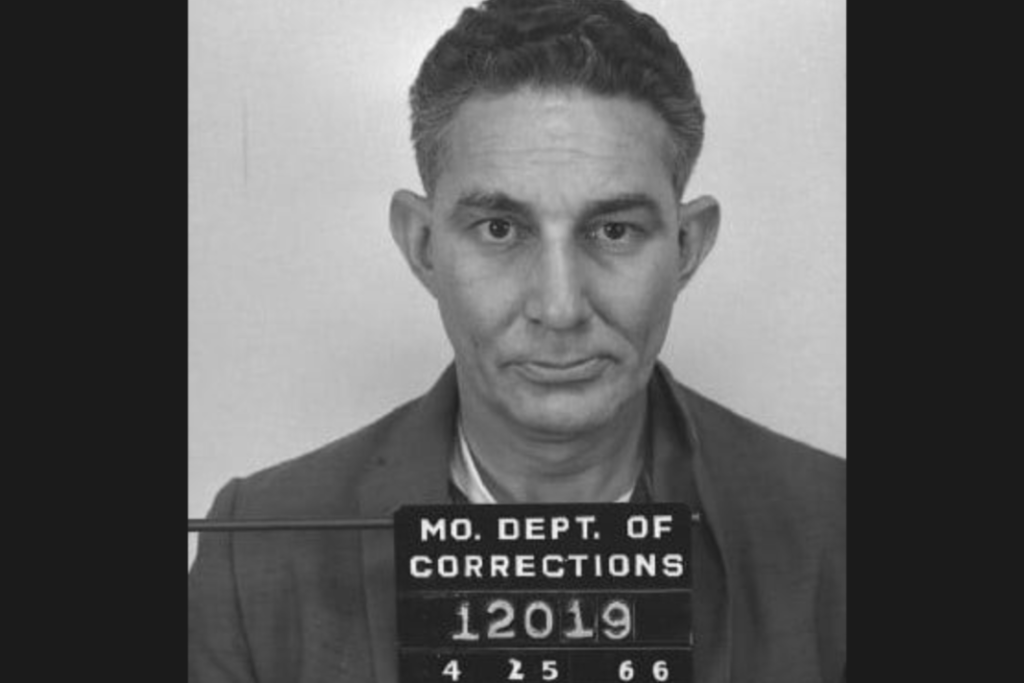
The legend of D.B. Cooper began on a rainy Thanksgiving Eve, November 24, 1971, when a man in a dark suit hijacked Northwest Orient Airlines Flight 305. He was calm and polite, eventually trading the passengers for $200,000 and four parachutes. Once the plane was back in the air, he did the unthinkable: he lowered the rear stairs and leaped out into a freezing storm over the rugged Pacific Northwest. He vanished into the night, and despite a massive manhunt, he was never seen or heard from again.
The FBI spent 45 years investigating the case before officially suspending it in 2016. The only real evidence ever found was a small bundle of decaying cash discovered by a boy on a riverbank in 1980. Whether Cooper survived the dangerous jump and lived out his life in secret, or perished in the unforgiving wilderness, is a question that may never be answered. It’s the only unsolved skyjacking in American history, and the fact that he seemingly pulled off the perfect crime makes him a permanent fixture in pop culture.
The Judge Who Disappeared
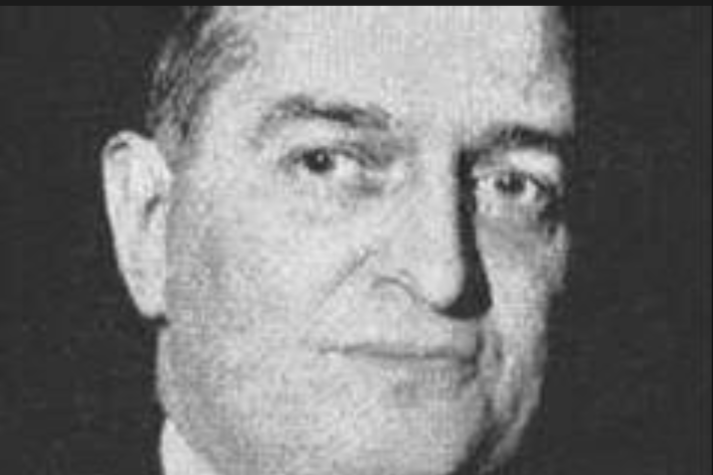
In the summer of 1930, Joseph Force Crater was a wealthy and successful New York Supreme Court justice. On the evening of August 6, he enjoyed a night out with friends at a Manhattan restaurant, stepped into a taxi, and drove off into history. His disappearance was so sudden and complete that the phrase “pulling a Larry Crater” (or simply “vanishing like Crater”) became a popular slang term for decades. He didn’t leave a note, and his bank accounts remained untouched, leaving his family and the police completely baffled.
Investigators later found that Crater had destroyed several documents and withdrawn a large sum of cash just before he went missing. This led to whispers about political corruption and secret dealings, but nothing was ever proven. Thousands of tips poured in over the years, yet none led to the judge. The case officially remained open for decades until it was finally declared cold in 1979. His story serves as a chilling reminder that even the most prominent and well-connected people can disappear without leaving a single trace behind in the middle of a crowded city.
Lost At Sea

The disappearance of Theodosia Burr Alston is a tragic tale from the early days of the United States. As the daughter of former Vice President Aaron Burr, she was a high-society figure known for her intellect and grace. On December 31, 1812, she boarded a ship named the Patriot in South Carolina to visit her father in New York. The ship sailed out into the Atlantic, but it never arrived at its destination. Theodosia and everyone else on board were lost to the sea, leaving her father heartbroken.
At the time, the War of 1812 was raging, which led to many theories about what happened to the vessel. Some believed a violent storm sank the ship, while darker rumors suggested it was intercepted by pirates who patrolled the Outer Banks. Despite various “deathbed confessions” from sailors decades later, no evidence ever surfaced to confirm the ship’s fate. Her story is a poignant reminder of how fragile travel was in the 19th century. Today, she is remembered as a brilliant woman whose life was cut short, leaving a void in one of America’s most famous political families.
The Child Prodigy Gone

Barbara Newhall Follett was a literary sensation before she was even a teenager. She published her first novel at age 12 in 1927 and was hailed as a genius by the biggest critics of the day. However, as she entered adulthood, the fame faded, and she struggled with the pressures of real life and a difficult marriage. On the evening of December 7, 1939, after a heated argument with her husband, the 25-year-old walked out of her Brookline, Massachusetts home with just $30 in her pocket and never returned.
Surprisingly, her disappearance wasn’t reported to the press for many years, partly because her husband didn’t seek immediate police help. By the time the public learned she was gone, the trail was freezing cold. There were no sightings, no letters, and no evidence of what happened to the once-celebrated author. It’s a heartbreaking story of a bright light that seemed to flicker out far too soon. To this day, fans of her work wonder if she started a new life under a different name or if her story ended in tragedy that night in 1939.
The Activist Who Vanished
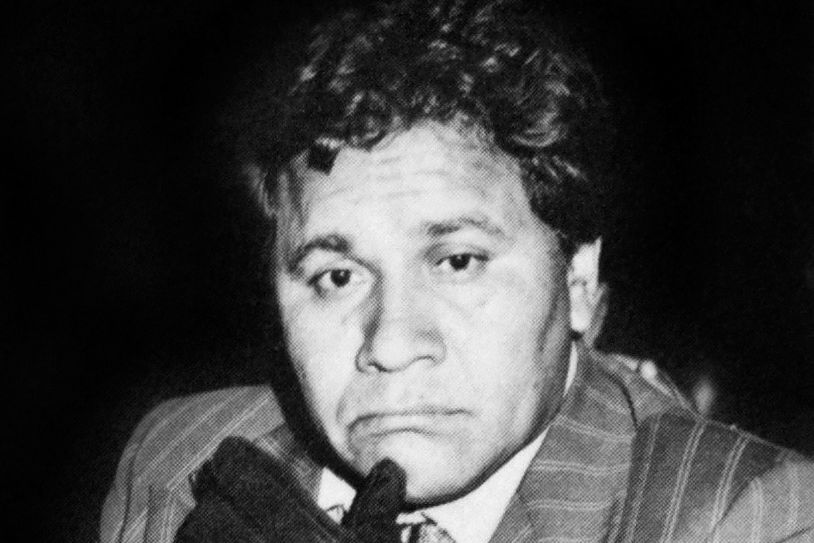
Oscar Zeta Acosta was a force of nature in the 1960s and 70s. A lawyer and writer, he was a key figure in the Chicano movement and famously appeared as the character “Dr. Gonzo” in Hunter S. Thompson’s books. Acosta was known for his fearlessness and his loud, rebellious personality. In May 1974, he traveled to Mexico for a trip, but after making a brief phone call to his son from Mazatlán, he vanished off the face of the earth.
Because Acosta lived such a high-stakes, experimental life, rumors about his fate were everywhere. Some thought he was targeted because of his political activism, while others believed he might have gotten caught up in the dangerous drug trade of the era. His son eventually traveled to Mexico to investigate but found no concrete answers. Acosta’s disappearance added a layer of myth to his already legendary status, turning him into a symbol of a turbulent time in American history. He left behind a legacy of bold writing and activism, but the mystery of his final days remains completely unsolved.
War Zone Mystery
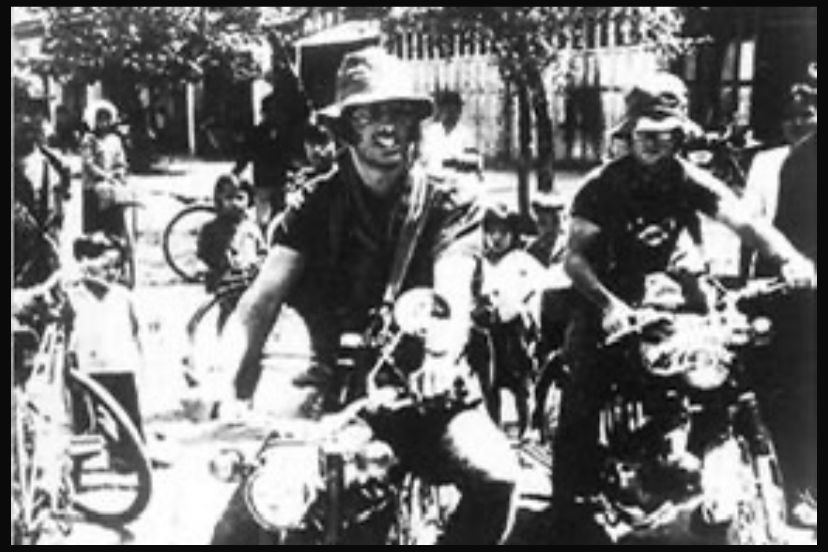
Sean Flynn didn’t want to follow his father, Errol Flynn, into the world of Hollywood acting. Instead, he sought real-world adventure as a photojournalist. By 1970, he was in the middle of the action, covering the Vietnam War and the conflict in Cambodia. On April 6, 1970, Flynn and his colleague Dana Stone hopped on motorcycles to head toward a front-line checkpoint. They were captured by Khmer Rouge guerrillas at a roadblock, and that was the last time they were seen by anyone from the West.
For years, Flynn’s mother spent a fortune searching for him, following rumors and hiring private investigators to comb through the Cambodian jungle. Some reports suggested he was held in captivity for a year or more, but no remains were ever positively identified. The chaos of the war made it nearly impossible to find the truth, and he was eventually declared legally dead in 1984. His story is a sobering look at the risks journalists take to tell important stories. Flynn’s life ended in a literal fog of war, leaving his family with decades of painful questions.
The Socialite Who Left
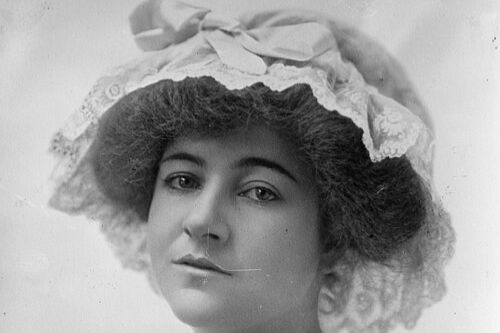
In 1910, the disappearance of Dorothy Arnold was the biggest news story in the country. Dorothy was a wealthy New York socialite and an aspiring writer who came from a very prominent family. On December 12, she told her mother she was going shopping on Fifth Avenue for a new dress. She was seen by friends along the way, buying some chocolates and a book, but she never made it back home for dinner. Her family initially kept it secret to avoid a scandal, which only hurt the investigation.
When the police finally got involved, they checked hospitals, morgues, and even European steamships, but Dorothy had simply evaporated. Theories flew in every direction, some thought she ran away to get married, while others feared something much worse had happened. Despite the Arnold family spending the equivalent of millions of dollars on private detectives, they never found a single clue. Her case is famous because it showed that even in high society, someone could disappear in broad daylight in one of the busiest cities on earth, leaving behind a mystery that still isn’t solved.
The Singer Who Drifted
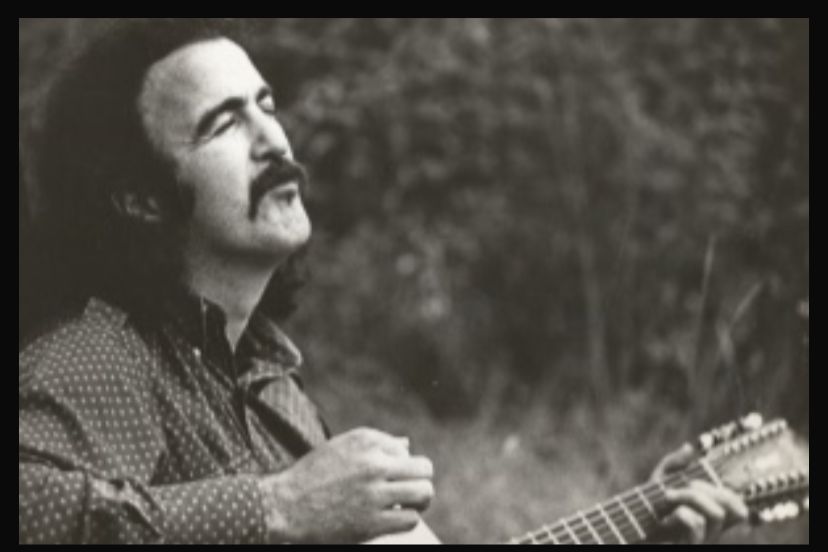
Jim Sullivan was a cult-favorite musician whose 1969 album, U.F.O., ironically focused on themes of desert landscapes and mysterious disappearances. In March 1975, Sullivan packed his guitar and his belongings into his Volkswagen Beetle and left Los Angeles, heading for Nashville to find success. He stopped in Santa Rosa, New Mexico, where he checked into a motel but reportedly didn’t sleep in the bed. The next day, his car was found abandoned on a remote ranch, miles away from the main road.
The scene was baffling: his guitar, his wallet, and his clothes were all still inside the car, but Jim was gone. Local police searched the harsh desert terrain for days, but they never found a body or any sign of a struggle. Some fans found it eerie that his music seemed to predict his fate, leading to all sorts of strange theories. However, the most likely reality is that he became disoriented in the desert. Regardless of what happened, Jim Sullivan’s story remains a haunting “lost track” in music history, ending abruptly in the quiet sands of New Mexico.
The Poet Who Vanished

Weldon Kees was a brilliant creative force who seemed to master everything he touched, from poetry and painting to jazz music. By the mid-1950s, he was a well-known figure in the San Francisco art scene, but he was also struggling with deep personal distress. On July 18, 1955, his car was found abandoned at the north end of the Golden Gate Bridge with the keys still in the ignition. Friends and authorities naturally feared the worst, assuming the talented writer had decided to end his life in the foggy waters below.
However, the case took a turn toward the mysterious because no body was ever recovered from the bay. This absence of proof led some of his closest associates to wonder if Kees had actually staged the whole thing to start a new life in Mexico. He had reportedly mentioned the idea of “disappearing” to friends just days before his car was found. Whether it was a tragic finale or a daring escape, Kees left behind a legacy of hauntingly beautiful work and a puzzle that has never been solved, leaving his final chapter as abstract as one of his paintings.
Hollywood’s Missing Teen

Tammy Lynn Leppert was a rising star in the early 1980s, a blonde-haired beauty who had already landed a small role in the 1983 classic Scarface. She was a regular on the beauty pageant circuit and seemed destined for a long career in front of the camera. However, friends noticed her behavior changing; she became increasingly fearful and paranoid, even suggesting she was being followed. On July 6, 1983, the 18-year-old walked away from a friend’s car in Cocoa Beach, Florida, after a disagreement and was never seen again.
Her disappearance sparked a massive investigation that spanned decades and looked into everything from serial killers to the dark underbelly of the modeling industry. Despite thousands of leads and several high-profile appeals on television, no concrete evidence of what happened to Tammy has ever surfaced. Her mother spent the rest of her life searching for answers, but the trail remained cold. Today, Tammy’s story serves as a somber reminder of the dangers that can lurk behind the glitz and glamour of a Hollywood dream, leaving her family and fans with only questions.
The Boy Who Vanished

The disappearance of six-year-old Etan Patz on May 25, 1979, changed the way American parents looked at the world forever. It was the first day his parents allowed him to walk the two blocks to his school bus stop in Lower Manhattan alone, but he never made it. Etan became one of the first “milk carton kids,” with his face appearing in kitchens across the country as part of a massive effort to find him. His case eventually led to the creation of National Missing Children’s Day, signed into law by President Reagan in 1983.
For decades, the case remained a painful mystery for the Patz family and the city of New York. It wasn’t until 2012 that a man named Pedro Hernandez confessed to the crime, leading to his conviction in 2017. However, because Etan’s remains were never found, many people still feel a sense of unease about the finality of the case. While the legal system has reached a verdict, the lack of physical closure means the story still carries a heavy emotional weight. Etan’s legacy lives on in the safety laws and awareness programs that protect children today.
Fire Without Answers
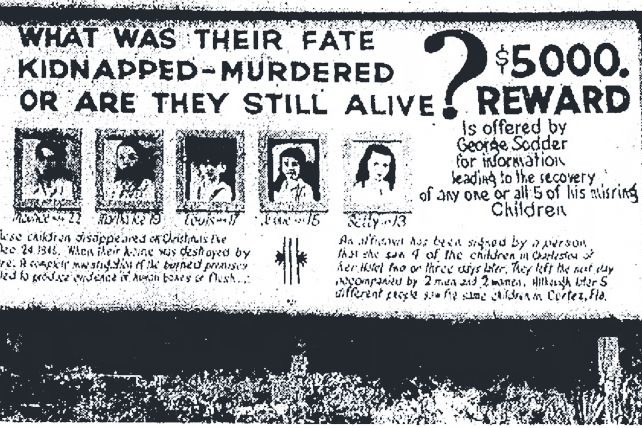
On Christmas Eve in 1945, the Sodder family of Fayetteville, West Virginia, experienced a nightmare that still baffles historians today. A sudden, violent fire destroyed their home while George and Jennie Sodder and nine of their children were inside. Four children escaped, but five others, ranging in age from 5 to 14, were trapped upstairs. When the fire died down, a thorough search of the ashes revealed something impossible: no bones or human remains were found. Fire marshals claimed the heat was high enough to cremate them, but experts later disagreed.
The Sodders became convinced their children were kidnapped before the fire was set as a cover-up. They spent the rest of their lives and their entire fortune following leads, even putting up a famous billboard along Route 16 with the children’s photos. Strange clues, like a suspicious man seen watching the house and the discovery of a “stolen” ladder, only added to their suspicions. Decades later, the case remains one of the most debated mysteries in American history, representing every parent’s worst fear and a family’s refusal to give up hope without proof.


