
1. NVIDIA’s AI dominance started with video games, not data centers

NVIDIA’s influence in AI traces back to its early focus on gaming graphics in the late 1990s and early 2000s. The company designed GPUs to handle massive parallel workloads so video games could render realistic lighting, textures, and motion in real time. These same parallel-processing capabilities later proved ideal for the matrix math required in machine learning. While CPUs handled tasks sequentially, GPUs could process thousands of operations simultaneously, which researchers eventually realized made them far better suited for neural networks. At the time, NVIDIA wasn’t targeting AI at all, but its relentless push for faster, more programmable graphics hardware accidentally laid the foundation for modern deep learning. By the time AI researchers came looking for more computational power, NVIDIA already had the right tool, refined over decades of gaming innovation.
2. CUDA locked developers into NVIDIA’s ecosystem years before AI went mainstream
In 2006, NVIDIA launched CUDA, a software platform that allowed developers to program GPUs for general-purpose computing rather than just graphics. At the time, the move drew little attention outside technical circles. But CUDA quietly became one of NVIDIA’s most powerful strategic advantages. Universities, research labs, and startups began building codebases optimized specifically for NVIDIA GPUs. Over time, entire research pipelines, tools, and libraries were written around CUDA, making it difficult to switch to competitors without major rewrites. When deep learning exploded in the 2010s, most popular AI frameworks already worked best on NVIDIA hardware. This created a powerful lock-in effect, where NVIDIA wasn’t just selling chips but an entire development environment that researchers and companies had come to rely on.
3. Deep learning breakthroughs in the 2010s favored GPUs by accident
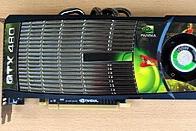
Many of the breakthroughs that sparked the AI boom were not designed with GPUs in mind, yet they benefited enormously from them. When researchers began training deep neural networks with millions or billions of parameters, traditional CPUs struggled to keep up. GPUs, originally built for rendering graphics, excelled at the same repetitive mathematical operations required for training AI models. Landmark achievements in image recognition, speech processing, and natural language understanding all ran significantly faster on NVIDIA GPUs. This performance gap made GPUs the default choice for AI research. NVIDIA found itself perfectly positioned as demand surged, not because it predicted every breakthrough, but because its hardware happened to match the needs of deep learning at exactly the right moment.
4. NVIDIA invested in AI research long before Wall Street cared

Years before AI became a buzzword in financial markets, NVIDIA was already deeply embedded in academic research. The company actively supported universities, funded research initiatives, and collaborated with scientists working on early machine learning projects. These relationships helped NVIDIA understand where AI workloads were heading and allowed it to refine its hardware and software accordingly. While competitors focused narrowly on consumer or enterprise markets, NVIDIA cultivated trust within the research community. As AI moved from labs into commercial products, many researchers brought their NVIDIA preferences with them into startups and large tech companies. This early credibility helped NVIDIA transition smoothly from a graphics company into a core infrastructure provider for AI.
5. AI training and AI inference both ended up favoring NVIDIA hardware

AI workloads fall into two major categories: training models and running them in real-world applications, known as inference. Initially, many believed different hardware would dominate each stage. Instead, NVIDIA GPUs proved effective at both. High-end GPUs excelled at training massive models, while optimized versions handled inference efficiently at scale. NVIDIA further reinforced this advantage by designing specialized chips and software tools that improved performance and energy efficiency for both tasks. As companies moved from experimenting with AI to deploying it across products and services, NVIDIA became a one-stop solution. This reduced complexity for customers and strengthened NVIDIA’s position as the default choice across the entire AI lifecycle.
6. Data centers quietly replaced gaming as NVIDIA’s main growth engine

For years, gaming was NVIDIA’s most visible business. But behind the scenes, data centers gradually became its largest source of revenue. As cloud providers, tech giants, and research institutions raced to build AI infrastructure, they purchased vast numbers of NVIDIA GPUs. These chips powered everything from recommendation algorithms to large language models. Over time, data center revenue eclipsed gaming, transforming NVIDIA’s identity. The company was no longer just serving gamers but becoming essential infrastructure for the global digital economy. This shift happened steadily rather than suddenly, making it easy to underestimate how deeply NVIDIA had embedded itself into the backbone of modern AI systems.
7. NVIDIA didn’t just sell chips, it sold complete AI platforms
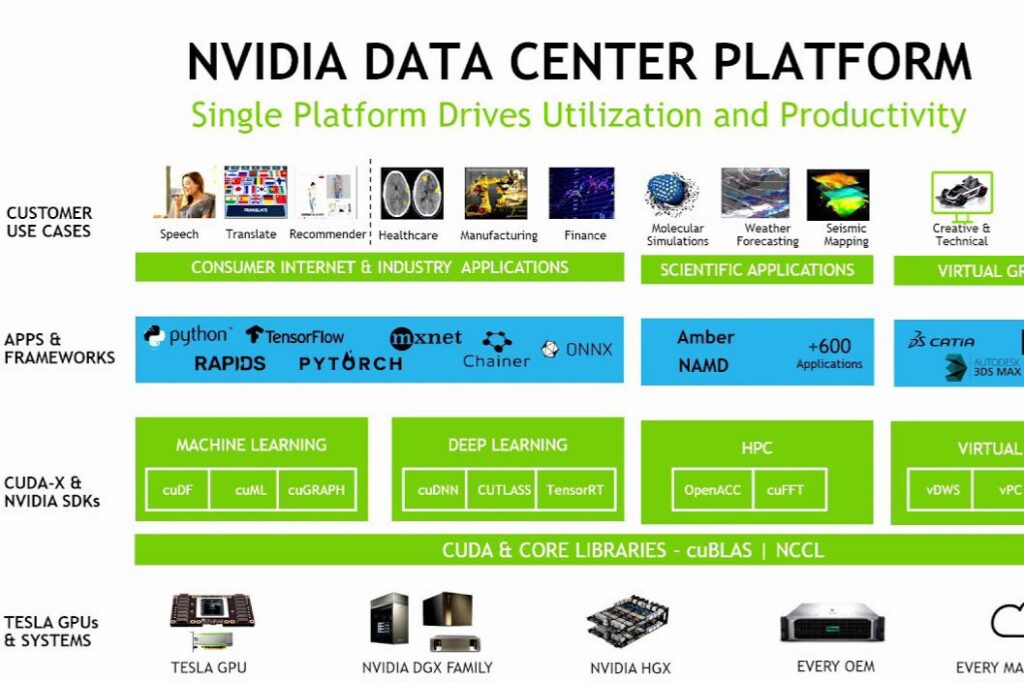
One reason NVIDIA pulled ahead is that it focused on complete platforms rather than standalone hardware. Alongside GPUs, the company built software libraries, development kits, optimization tools, and industry-specific AI solutions. These offerings made it easier for companies to adopt AI without building everything from scratch. NVIDIA’s approach reduced friction for customers and accelerated deployment timelines. Instead of competing solely on chip performance, NVIDIA positioned itself as a partner that could help organizations move from experimentation to production. This platform strategy made its products harder to replace and deepened customer reliance across industries ranging from healthcare to autonomous driving.
8. AI cloud services amplified NVIDIA’s reach worldwide

The rise of cloud computing significantly amplified NVIDIA’s influence. Major cloud providers integrated NVIDIA GPUs into their offerings, allowing startups and researchers to access powerful AI hardware without owning it. This lowered barriers to entry and ensured that NVIDIA technology became the default environment for AI development worldwide. As more developers trained models on cloud-based NVIDIA GPUs, familiarity and dependency increased. Even companies that never bought physical NVIDIA hardware still built their AI systems around its technology. This global reach turned NVIDIA into a foundational layer of the AI economy, quietly powering innovation across continents and industries.
9. NVIDIA benefited from AI’s sudden demand surge without needing reinvention

When AI demand surged rapidly in the early 2020s, NVIDIA didn’t need to reinvent itself. Its hardware, software, and supply chain were already aligned with AI workloads. While competitors scrambled to adapt, NVIDIA scaled production and refined existing products. This readiness allowed the company to capture an outsized share of the growing market. Shortages of high-performance GPUs further highlighted NVIDIA’s importance, as access to its chips became a bottleneck for AI progress. The company’s years of preparation paid off almost instantly, reinforcing its leadership position at a critical moment.
10. NVIDIA’s success reshaped how the tech industry views hardware companies

NVIDIA’s rise changed perceptions across the tech world. Hardware companies were once seen as slower and less influential than software firms. NVIDIA demonstrated that hardware, when paired with the right ecosystem, could drive entire technological revolutions. Its success encouraged renewed investment in chips, specialized processors, and infrastructure. Today, AI progress is inseparable from hardware innovation, and NVIDIA stands as proof that long-term vision in engineering can redefine an industry.
The company didn’t just ride the AI wave, it helped shape the direction and pace of the AI era itself.


